
What Emmy Award-Winning Animation Taught Me About Christmas Storytelling

✦ The Herald Dispatch ✦
Before MARK! The Herald Angel, I spent years working in animated children's content. Specifically, I was part of the writing and development team for Auto-B-Good — a series that went on to win five Emmy Awards and find its way into the homes and hearts of families across the country.
It was, in many ways, the best education in family storytelling I could have received. Not a formal education — though I respect those tremendously — but a practical, deadline-driven,
audience-accountable education in what actually works for families watching a screen together.
The things I learned in that room shaped everything I later put into MARK! The Herald Angel. I want to share some of them, because I think they're useful far beyond any specific project.
The Every-Age Test
The single most rigorous test any piece of family content has to pass — and the one that eliminates the most projects in the development stage — is what I call the every-age test.
Does this work for the five-year-old and the forty-five-year-old in the same room at the same time?
Not: does it work for children, with adults tolerating it patiently? Not: does it work for adults, with children sitting through it because they don't have a choice? But genuinely, simultaneously, for all ages at once?
This is a high bar. Most content doesn't clear it. The ones that do — A Charlie Brown Christmas, Klaus, The Best Christmas Pageant Ever, The Muppet Christmas Carol — tend to become perennial favorites precisely because they can be watched or read with any combination of ages and the experience holds for all of them.
The mechanism is usually the same: a surface layer of humor, character, and accessible narrative that keeps the children engaged, plus a deeper layer of theme and meaning that gives the adults something to chew on — and at least one moment where both layers converge and something lands hard for everybody at the same time, just for different reasons.
In MARK! The Herald Angel, that moment is the goat eating the last pencil while Mark is too
transfixed by the newborn King to notice. Hilarious for a seven-year-old. Theologically devastating for a forty-seven-year-old. Every age in the room, at the same time.
(story continues after ad)
Earned Emotion
In animation development, there's a phrase that gets used a lot: earned emotion. It means that the emotional payoff of a scene — the laugh, the cry, the gasp, the ache — has to be built toward, brick by brick, across the preceding scenes. You can't skip the bricks and go straight to the emotion. The audience will feel the shortcut and the moment won't land.
A lot of Christian content — and I say this with love and as a member of the community — goes for the emotion without doing the brick-by-brick work first. The message is theologically sound. The intention is genuinely good. But the storytelling hasn't earned the tears it's asking for.
The reason I spent so much of MARK! The Herald Angel in Paradise City — on the bus, in the elevator, at the Eternal Herald, in Mark's apartment, at the train station — before we ever get to Bethlehem is that I was building bricks. I needed the reader to genuinely know Mark, genuinely like him, genuinely be invested in his Tuesday afternoons and his pencil-sharpening routines and his purple bowtie, before I asked them to feel anything about what happens to him in the stable.
By the time Mark opens his mouth and the song comes out, the reader has been in his company for sixty pages. That's earned emotion. And it makes the ending land differently than if we'd gone straight to the stable.
Voice Is Everything
The last thing I'll share from my animation education: voice is everything.
In animation, the voice actor's performance is the emotional center of the story. Everything else — the visuals, the music, the writing — serves the performance. When the performance is right, audiences forgive a great deal. When it's wrong, nothing else saves it.
In prose, voice operates the same way. The narrative voice of a book is the reader's companion for every page. If that voice is generic or inconsistent or doesn't feel like a real person, the reader is always slightly at a distance. If the voice is specific and consistent and genuinely interesting, the reader leans in.
Mark's voice is probably the thing I worked hardest on in this book. He sounds like nobody else. He's precise and slightly formal and deeply sincere and occasionally unexpectedly funny. He's the kind of character you can hear in your head, which is why I always recommend reading the book aloud. The voice was built for that.
Fair dinkum storytelling starts with a voice that's worth listening to.
✦ MARK! The Herald Angel — built with every storytelling lesson I've learned.
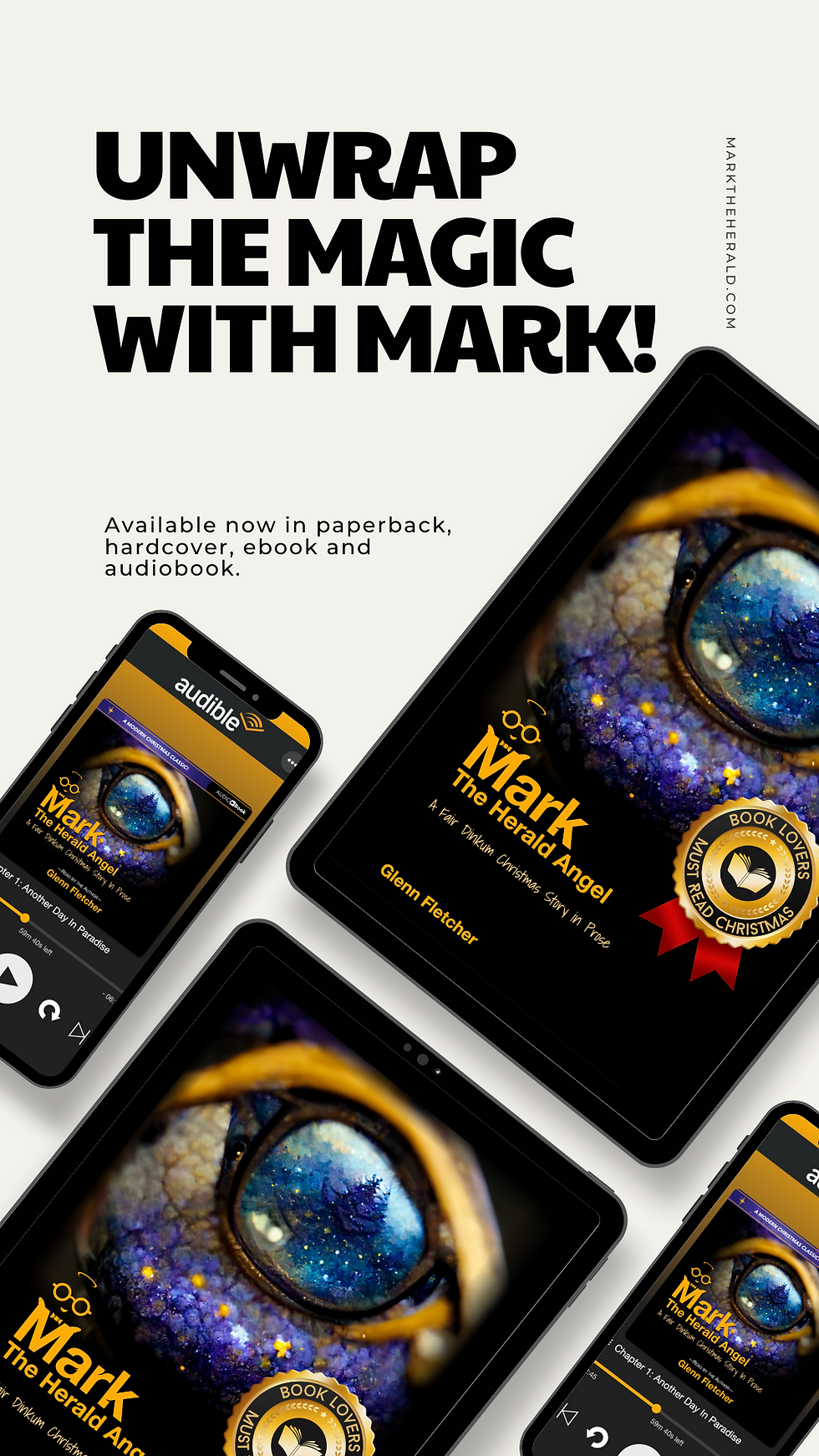
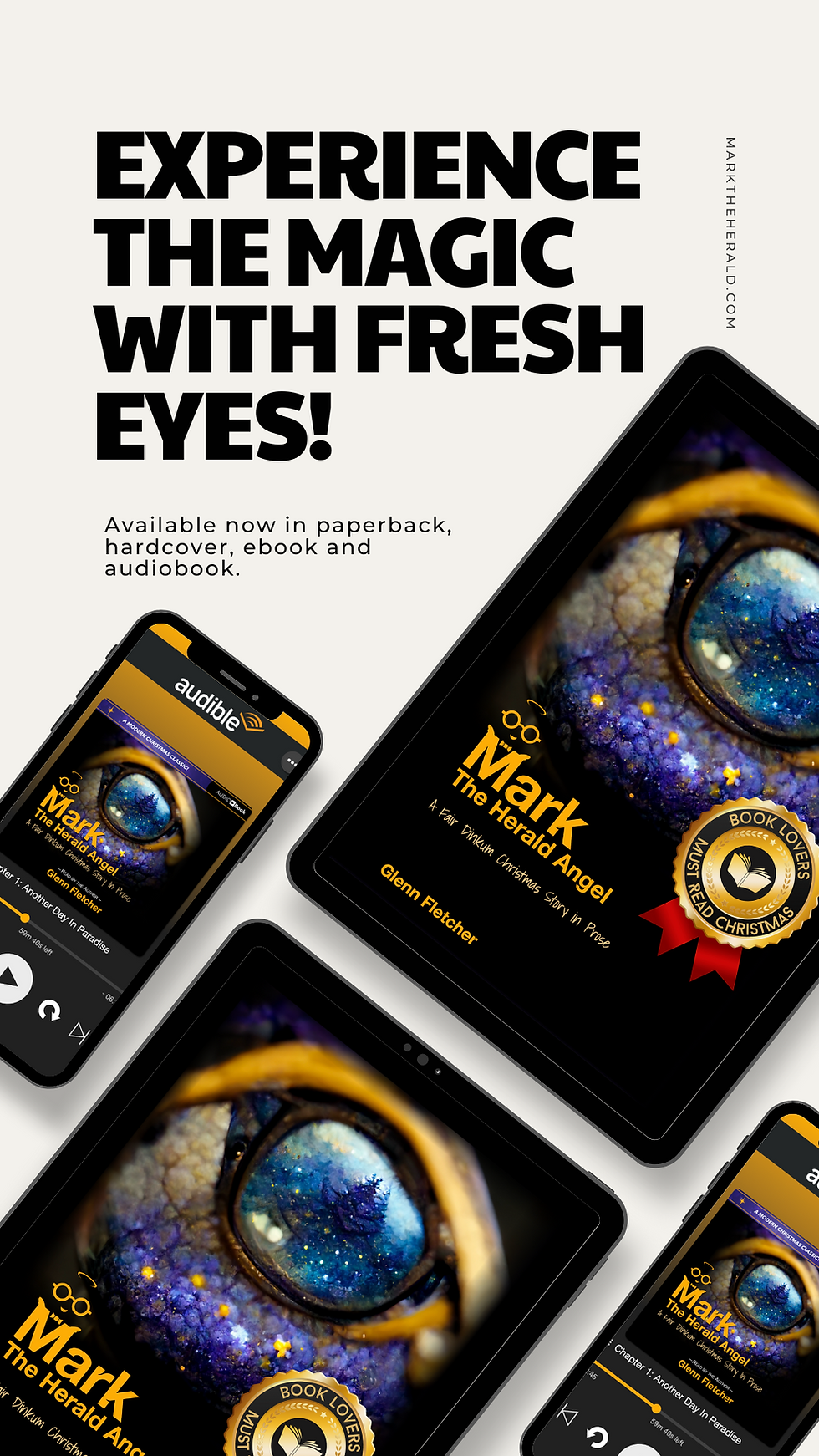
Available at MarkTheHerald.com in print, eBook, and audiobook.


Comments